
Web development in the UAE is not static. The technologies, tools, and standards that define a professional website in 2026 are already very different from those used in 2022. More importantly, this pace of change is not slowing down.
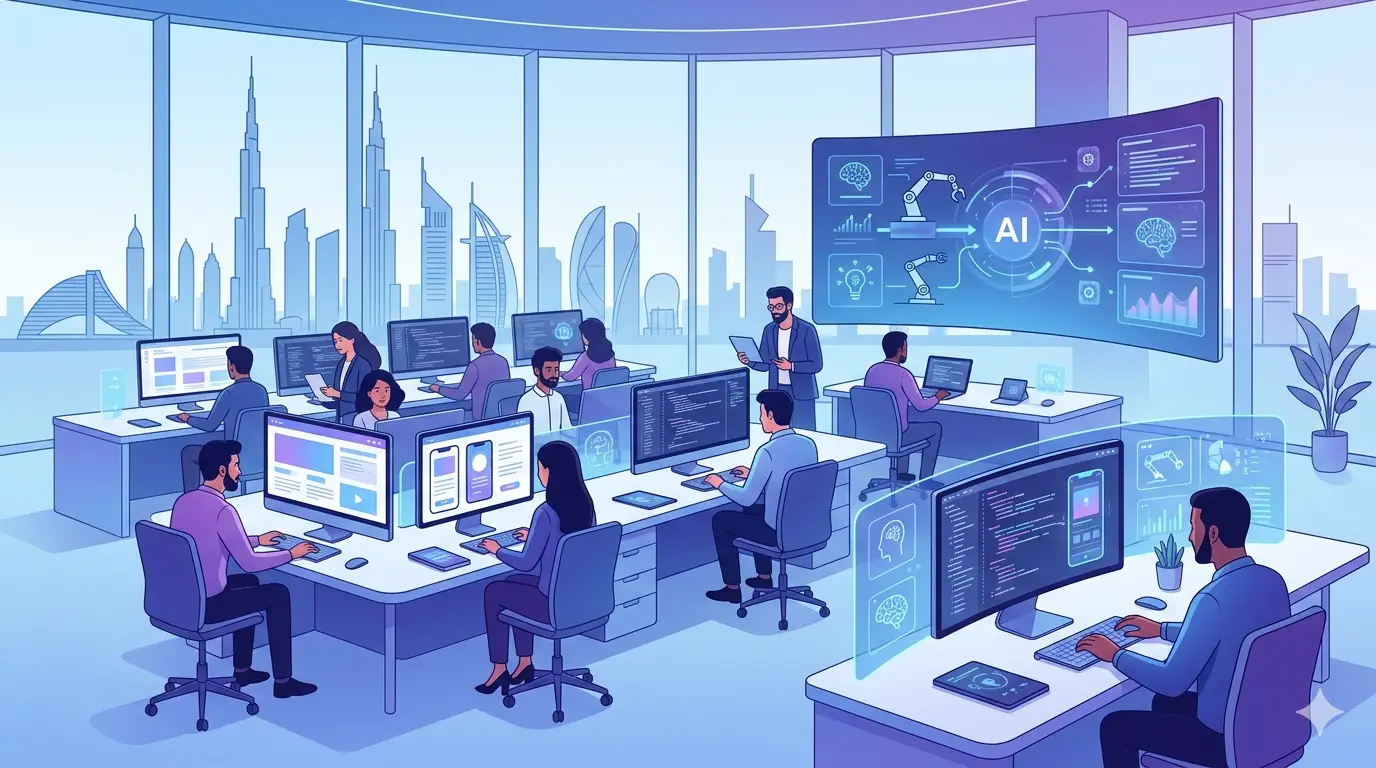
Artificial intelligence, automation, and modern web architectures are reshaping how websites are built. As a result, businesses in Dubai, Abu Dhabi, and Sharjah now expect faster, smarter, and more flexible digital solutions. They also expect websites to be built quickly and to serve customers more intelligently.
For UAE business owners, this shift creates both an opportunity and a risk. On one side, emerging technologies can make websites faster to build, more personalised, and more efficient. On the other side, businesses that treat their website as a finished product risk falling behind competitors who continue to evolve.
Understanding where web development in the UAE is heading is not just a technical exercise. It is a business planning decision.
Quick Answer: What Is the Future of Web Development in the UAE?
The future of web development in the UAE is shaped by several major shifts. These include AI-powered personalisation, automation through AI coding tools, voice and conversational interfaces in Arabic and English, strong performance standards based on Core Web Vitals, and the rise of headless and composable architectures.
Together, these trends are changing how websites function. Modern websites are becoming smarter, faster, and more adaptable. They are also easier to manage and more efficient to maintain compared to traditional approaches.
How Is AI Already Changing Web Development in the UAE?
Artificial intelligence is not something for the future. It is already part of how leading agencies in the UAE build and manage websites today.
AI-Assisted Development Is Accelerating Build Speed
AI coding tools such as GitHub Copilot and Cursor are reducing development time significantly. Tasks that once took hours, such as writing repetitive code or building integrations, can now be completed much faster.
This does not replace developers. Instead, it improves their productivity. Developers can now focus on complex logic and strategic decisions, while AI handles routine work.
AI-Powered Personalisation Is Becoming Standard
Websites in the UAE are also becoming more personalised. AI allows websites to show different content based on user behaviour, location, and intent.
For example, users may see different offers, recommendations, or calls to action depending on how they interact with the site. This level of personalisation was once limited to large companies, but it is now accessible to many UAE businesses.
What Are the Emerging Technologies Shaping UAE Web Development?
Voice Search and Conversational Interfaces
Voice search is growing quickly in the UAE. Users are now searching using natural language instead of typing keywords.
Because of this, websites must be structured differently. Content should focus on clear answers, natural language, and conversational tone.
Arabic voice search is still underutilised. This creates a strong opportunity for businesses that adopt it early.
Composable and Headless Architecture at Scale
Traditional CMS platforms combine everything into one system. However, modern businesses need more flexibility.
Headless and composable architectures separate content from design. This allows businesses to manage websites, apps, and multiple languages more efficiently.
This is especially important in the UAE, where businesses often operate in both Arabic and English.
Core Web Vitals as the Floor, Not the Ceiling
Website performance is no longer optional. It is now a basic requirement.
In the past, fast websites were a competitive advantage. Today, they are the minimum standard. Websites that do not meet performance benchmarks are likely to rank lower and lose users.
Edge Computing and Reduced Latency
Edge computing improves website speed by delivering content closer to users.
This reduces loading time and improves user experience. It is especially important for e-commerce and high-performance platforms, where even small delays can impact conversions.
What Does This Mean for UAE Businesses?
The future of web development is already here. Businesses cannot afford to wait.
Companies that adopt modern technologies early gain a strong advantage. In contrast, those using outdated systems may face higher costs in the future.
When building a new website, businesses should focus on scalability, performance, and flexibility. It is also important to choose development partners who use modern tools and AI-driven workflows.
Practical Steps for UAE Businesses
Businesses should start by reviewing their current website performance. Tools like Google PageSpeed Insights can help identify gaps in speed and user experience.
It is also important to evaluate whether the current CMS supports AI features and personalisation. If not, upgrading the system may be necessary.
Content structure should also be improved. Websites should include clear answers, FAQ sections, and conversational content to support voice search and AI-driven results.
For UAE businesses, Arabic content must meet high standards. A poor Arabic experience can limit growth, especially as voice and AI usage increases.
Finally, any new project should include AI integration from the beginning. Adding these features later is often more expensive and complex.
Key Takeaways
The future of web development in the UAE is driven by AI, automation, performance, and modern architecture. Businesses that adopt these trends early will gain a competitive advantage.
AI is already improving development speed and website performance. Voice search and Arabic optimisation offer new opportunities for visibility. At the same time, performance standards are becoming stricter, making fast websites essential.
Decisions made today will determine how easy it is to scale and adapt in the future.
Frequently Asked Questions
What is the future of web development in the UAE?
The future of web development in the UAE includes AI personalisation, automation, conversational interfaces, headless architecture, and strong performance standards. These trends are already shaping the market.
How is AI changing website development in Dubai?
AI is improving development speed, enabling personalisation, and supporting automation. It allows businesses to deliver better user experiences with less manual effort.
Will AI replace web developers in the UAE?
No. AI supports developers by automating repetitive tasks. However, human expertise is still required for strategy, architecture, and complex problem-solving.
What web development trends should UAE businesses invest in?
Businesses should focus on performance optimisation, AI integration, Arabic content, and scalable architectures. These areas are already defining successful websites in the UAE
How should UAE businesses choose a web development agency?
Businesses should choose agencies that use modern tools, understand AI integration, and deliver strong performance results. Experience in bilingual development is also important.
Conclusion
Web development in the UAE is evolving quickly. The gap between modern and outdated websites is increasing.
Businesses that treat their website as a long-term asset will benefit the most. Those who ignore these changes risk losing visibility and competitiveness.
W3Torch is a UAE-based digital agency building future-ready websites, mobile applications, and software platforms. From AI integration to headless architecture, W3Torch focuses on building solutions designed for the future.
If you are planning your next project, now is the time to act and build a website that remains competitive for years to come.